"Lonely, Lonely, Tin can at my feet, I think I'll kick it down the street, That's the way to treat a friend"
--Tom Odell, "I Think It's Going To Rain Today"
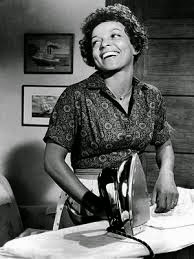
This week in class we discussed "Disability" by Nancy Mairs, an informative essay that describes the trials and tribulations the disabled encounter daily. She discusses that although the disabled are "just like every other" person, society still "looms" on the "embodiment" of their disease (Mairs para 4). With a disability, she enjoys food, "drives a car" and tries to maintain beauty with "lotions", similarly to most women in America. Yet the media (movie productions and advertisements) portrays disability as the "major premise" of a woman's life and excludes the character's personality and individuality (Mairs para 3). With the idea that disability ruins one's jovial life, society is manipulated to view those with a disability as helpless and hopeless, feelings that a person would rather do without. Society will then look down upon them and ignore their presence because they do not want to "conform" to someone less fortunate than themselves (Mairs para 6). Ultimately, the disabled become outcasts and don't fit in with others because they are different and unable to conform with the rest of society. Sadly, people forget that the disabled live their lives comparably and our own happiness could mitigate in a moment. After all, we are just "Temporarily Abled Persons", drunk on the idea that our euphoria is infinite (Mairs para 7).
Friday, January 30, 2015
Saturday, December 20, 2014
Rejoicing Ruth
"I can hardly wait to leave this place; this is not a home, I think I'm better off alone"
--Three Days Grace, "Home"
Saturday, December 13, 2014
Destructive Diamond
"The sunset still looks fake to me, the hero looks like he can't breathe, the damsel just left everything"
Once upon a time there was a family that lived on a colossal diamond. The Washington's owned generational wealth; the status that corresponds with this manipulates the characters personalities and actions. Kismine, one of the daughters, is an extravagant and beautiful girl of sixteen. She is described to have "physical perfection", and acts flirtatious and fake around John Unger, their summer house guest. Kismine is like the Kim Kardashian of today. But hidden under this mask of elegance, corruption lies in the soul of Kismine, and everyone in her family. They "sacrifice some of their best friends" because the family is afraid of a guest disclosing the following: wealth, location, and the giant diamond, in order to hoard their grand prosperity. Kismine reveals this to John, speaking with nervous and stressful rhetoric. "Yes-th-that's the-the whole t-trouble. I grew up qu-quite attached to some of them. So did Jasmine, but she kept inv-inviting them anyway". This conveys the intensity of corruption that lies beneath the surface of the Washington family. Because Kismine speaks with such tension, it is implied (and ironic) that there is mental pressure to keep the secret in order to maintain a status that doesn't portray corruption. Like pink elephants, Kismine may look charming and pretty on the outside, yet is fake and has a fraudulent mentality. John Unger is ultimately her hero, like Moses in Exodus, because he removes her from her corrupt home into a world of reality.
--Mayday Parade, "Black Cat"
Once upon a time there was a family that lived on a colossal diamond. The Washington's owned generational wealth; the status that corresponds with this manipulates the characters personalities and actions. Kismine, one of the daughters, is an extravagant and beautiful girl of sixteen. She is described to have "physical perfection", and acts flirtatious and fake around John Unger, their summer house guest. Kismine is like the Kim Kardashian of today. But hidden under this mask of elegance, corruption lies in the soul of Kismine, and everyone in her family. They "sacrifice some of their best friends" because the family is afraid of a guest disclosing the following: wealth, location, and the giant diamond, in order to hoard their grand prosperity. Kismine reveals this to John, speaking with nervous and stressful rhetoric. "Yes-th-that's the-the whole t-trouble. I grew up qu-quite attached to some of them. So did Jasmine, but she kept inv-inviting them anyway". This conveys the intensity of corruption that lies beneath the surface of the Washington family. Because Kismine speaks with such tension, it is implied (and ironic) that there is mental pressure to keep the secret in order to maintain a status that doesn't portray corruption. Like pink elephants, Kismine may look charming and pretty on the outside, yet is fake and has a fraudulent mentality. John Unger is ultimately her hero, like Moses in Exodus, because he removes her from her corrupt home into a world of reality.
Sunday, November 30, 2014
Manipulative Money
"Money money money, always sunny, in a rich man's world"
-"Money", Abba
Relationships with other members of society heavily rely on one's social class, especially in The Great Gatsby. Daisy, a young, "excitingly desirable" (pg 148) girl is influenced by the standards of her "rich, full life" (pg 149). In her early adulthood, she falls in love with Gatsby, who was considered to be middle-class at the time. Although their relationship is strong, Daisy cannot commit to it because Gatsby lacks a status of old wealth. She is "flattered" when Tom Buchanan appears in her "artificial world"(pg 150), because he is contained within the wealthy class, exactly what she desires. It is the burden of a pompous social class that persuades her to marry into money. She initially rejects Gatsby when he lacks wealth, but she appeals him once he feigns righteousness. Her implanted prejudice ultimately affects her relationship with Gatsby because social status determines her appearance in society. She is unwilling to release herself from her colossal fortune, and this affects her relationship with Gatsby because he would downgrade her status. Gatsby states, "Her voice is full of money" (pg 120), which immediately implies that money is what she truly cares about, and her wealthy status is too important to give up for a man. Because Daisy's social class is a dominating feature in her life, its wealthy ideals are prominent in her relationships with others.
-"Money", Abba
Relationships with other members of society heavily rely on one's social class, especially in The Great Gatsby. Daisy, a young, "excitingly desirable" (pg 148) girl is influenced by the standards of her "rich, full life" (pg 149). In her early adulthood, she falls in love with Gatsby, who was considered to be middle-class at the time. Although their relationship is strong, Daisy cannot commit to it because Gatsby lacks a status of old wealth. She is "flattered" when Tom Buchanan appears in her "artificial world"(pg 150), because he is contained within the wealthy class, exactly what she desires. It is the burden of a pompous social class that persuades her to marry into money. She initially rejects Gatsby when he lacks wealth, but she appeals him once he feigns righteousness. Her implanted prejudice ultimately affects her relationship with Gatsby because social status determines her appearance in society. She is unwilling to release herself from her colossal fortune, and this affects her relationship with Gatsby because he would downgrade her status. Gatsby states, "Her voice is full of money" (pg 120), which immediately implies that money is what she truly cares about, and her wealthy status is too important to give up for a man. Because Daisy's social class is a dominating feature in her life, its wealthy ideals are prominent in her relationships with others.
Saturday, November 22, 2014
Cranial Conditioning
"I was thinking, over thinking, cause there's just too many scenarios to analyze"
--Relient K, "Over Thinking"
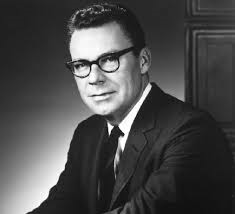
A few weeks ago, I listened to a speech given by Earl Nightingale. It was titled "The Strangest Secret", and discussed the power we have to control our minds positively to improve our outlook on life. The secret, strange because it is misunderstood by humans yet life-altering, suggests "We become what we think about".
In "This is Water" by Wallace, Nightingale's bold statement is portrayed as effective for finding meaning to life. He discusses how daily duties of adulthood, such as waiting in a checkout line after a long day at work, can be examined in a broader and positive manner. A human can "look at how repulsive most of them [people] are, and how stupid and cow-like and dead-eyed and nonhuman they seem ... how annoying and rude it is" (para 16). As well as this, he uses the woman in the checkout line "who just screamed at her kid" to convey the "annoying and miserable" conditions of life. She may be a"low-wage clerk" who has to support her "husband dying of bone cancer", yet mankind judges her without empathy.
"Thinking this way tends to be so easy and automatic that it doesn't have to be a choice"(Wallace para 19). Also, thinking this way "will get negative results" (Nightingale). Life will not have meaning and humans will achieve absolutely nothing with a pessimistic perception. Marcus Aurelius, the great Roman Emperor, said: “A man’s life is what his thoughts make of it.” You have the power to choose your perception. Discover who you want to become and set your mind on a specific goal. Eventually, you will achieve.
Wallace states that "it will actually be within your power to experience a crowded, hot, slow, consumer-hell type situation as not only meaningful, but sacred"(para 23). He explains this to college students because he understands that having a positive outlook is vital for a positive and successful life, and they are just beginning their journey.
So, be the "lord of [your] tiny skull-sized kingdom", and direct your mind to become who you want to be.
--Relient K, "Over Thinking"
A few weeks ago, I listened to a speech given by Earl Nightingale. It was titled "The Strangest Secret", and discussed the power we have to control our minds positively to improve our outlook on life. The secret, strange because it is misunderstood by humans yet life-altering, suggests "We become what we think about".
In "This is Water" by Wallace, Nightingale's bold statement is portrayed as effective for finding meaning to life. He discusses how daily duties of adulthood, such as waiting in a checkout line after a long day at work, can be examined in a broader and positive manner. A human can "look at how repulsive most of them [people] are, and how stupid and cow-like and dead-eyed and nonhuman they seem ... how annoying and rude it is" (para 16). As well as this, he uses the woman in the checkout line "who just screamed at her kid" to convey the "annoying and miserable" conditions of life. She may be a"low-wage clerk" who has to support her "husband dying of bone cancer", yet mankind judges her without empathy.
"Thinking this way tends to be so easy and automatic that it doesn't have to be a choice"(Wallace para 19). Also, thinking this way "will get negative results" (Nightingale). Life will not have meaning and humans will achieve absolutely nothing with a pessimistic perception. Marcus Aurelius, the great Roman Emperor, said: “A man’s life is what his thoughts make of it.” You have the power to choose your perception. Discover who you want to become and set your mind on a specific goal. Eventually, you will achieve.
Wallace states that "it will actually be within your power to experience a crowded, hot, slow, consumer-hell type situation as not only meaningful, but sacred"(para 23). He explains this to college students because he understands that having a positive outlook is vital for a positive and successful life, and they are just beginning their journey.
So, be the "lord of [your] tiny skull-sized kingdom", and direct your mind to become who you want to be.
![]() |
| Earl Nightingale |
Sunday, November 16, 2014
Playful Punctuation
"Once I rose above the noise and confusion, just to get a glimpse beyond this illusion"
-- Kansas, "Carry on my Wayward Son"
Because I strongly supported my argument for Friday's debate, I am going to discuss and elaborate more on the same topic.
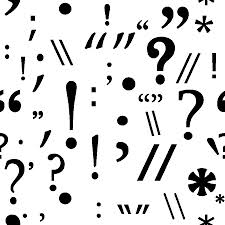
The differences of various writing styles portray that punctuation use cannot be totally defined because each writing technique has a specific way of effectively proving a claim. It was researched that Emily Dickinson, author of Source C, did not attend college for a vast amount of time and she dwelled in confinement the majority of her life. Because of this, she uses poetry, a writing style that allows manipulation of words and punctuation easily, and uses a lack of punctuation in order to feel free from her life of isolation.
If rules were set strictly in place, she would always be stuck in a place of seclusion. Punctuation in different contexts also has different effects on the writing piece, and therefore must be altered according to the writing style. With punctuation rules, this would be prohibited. Cosco of Source F uses two question marks in a sentence located in paragraph six. This is obviously a subjective choice, but it allows her to develop her unique style. Expressing one’s argument in a way that is sensible for the author is critical for the effectiveness of the work. The example tweet used in Source F lacks in punctuation, but focuses more on word content. In fact, the unusual lack of punctuation draws attention to her message in an otherwise monotone news feed. Similarly to the sources stated, punctuational rules serve as a restriction to authors. Without these limits, authors can develop a sturdy and compelling argument conveyed in a specific writing style.
-- Kansas, "Carry on my Wayward Son"
Because I strongly supported my argument for Friday's debate, I am going to discuss and elaborate more on the same topic.
The differences of various writing styles portray that punctuation use cannot be totally defined because each writing technique has a specific way of effectively proving a claim. It was researched that Emily Dickinson, author of Source C, did not attend college for a vast amount of time and she dwelled in confinement the majority of her life. Because of this, she uses poetry, a writing style that allows manipulation of words and punctuation easily, and uses a lack of punctuation in order to feel free from her life of isolation. If rules were set strictly in place, she would always be stuck in a place of seclusion. Punctuation in different contexts also has different effects on the writing piece, and therefore must be altered according to the writing style. With punctuation rules, this would be prohibited. Cosco of Source F uses two question marks in a sentence located in paragraph six. This is obviously a subjective choice, but it allows her to develop her unique style. Expressing one’s argument in a way that is sensible for the author is critical for the effectiveness of the work. The example tweet used in Source F lacks in punctuation, but focuses more on word content. In fact, the unusual lack of punctuation draws attention to her message in an otherwise monotone news feed. Similarly to the sources stated, punctuational rules serve as a restriction to authors. Without these limits, authors can develop a sturdy and compelling argument conveyed in a specific writing style.
Sunday, November 9, 2014
Longing for Love
"It's a backstabbing world honey, just lean your head back"
--Augustana, "Meet You There"
"It had occurred to Pecola some time ago that if her eyes, those eyes that held the pictures, and knew the sights-if those eyes of hers were different, that is to say, beautiful, she herself would be different. Her teeth were good, and at least her nose was not big and flat like some of those who were thought so cute. If she looked different, beautiful, maybe Cholly would be different, and Mrs. Breedlove too. Maybe they'd say, 'Why, look at pretty-eyed Pecola. We mustn't do bad things in front of those pretty eyes'" (Morrison page 46).
Pecola believes that if her eye color changed to blue, her entire life would change. Friends, acquaintances, and family would treat her differently. She wants her situation to change because she has dwelled in a life of destitution and hatred. Pecola feels as if something is missing. This something, is love. Morrison states the Breedlove's house is just a "store", implying that soothing warmth of family love is absent from their home. Ultimately, Pecola wants to feel loved, and believes that blue eyes would grant it. Her drive to be beautiful is connected to her wish to belong, in both black and white society. She is unwanted by students and family because she is "ugly", so she associates beauty with belonging. If people perceive her as beautiful, because of her eyes, then she will maintain an identity of elegance. Pecola's only way of finding universal love is to conform to white beauty ideals.
This passage of The Bluest Eye is filled with many strong emotions. The audience obtains a true understanding of the reasons behind Pecola's wish to have blue eyes. This makes the entire book worthwhile because Pecola cannot be misunderstood, and it is simpler to follow her path of destruction. Morrison repeats the words "beautiful" and "different" to emphasize that Pecola wants to be beautiful in order to have a different identity. Not only would redefined beauty change the actions of those around her, but it would increase the amount of passion she obtains from society. Her mindset revolves around the beauty she lacks, but Pecola's heart is the apex of beauty. She still learns to love when everything and everyone around her decides to hate.
--Augustana, "Meet You There"
"It had occurred to Pecola some time ago that if her eyes, those eyes that held the pictures, and knew the sights-if those eyes of hers were different, that is to say, beautiful, she herself would be different. Her teeth were good, and at least her nose was not big and flat like some of those who were thought so cute. If she looked different, beautiful, maybe Cholly would be different, and Mrs. Breedlove too. Maybe they'd say, 'Why, look at pretty-eyed Pecola. We mustn't do bad things in front of those pretty eyes'" (Morrison page 46).
Pecola believes that if her eye color changed to blue, her entire life would change. Friends, acquaintances, and family would treat her differently. She wants her situation to change because she has dwelled in a life of destitution and hatred. Pecola feels as if something is missing. This something, is love. Morrison states the Breedlove's house is just a "store", implying that soothing warmth of family love is absent from their home. Ultimately, Pecola wants to feel loved, and believes that blue eyes would grant it. Her drive to be beautiful is connected to her wish to belong, in both black and white society. She is unwanted by students and family because she is "ugly", so she associates beauty with belonging. If people perceive her as beautiful, because of her eyes, then she will maintain an identity of elegance. Pecola's only way of finding universal love is to conform to white beauty ideals.
This passage of The Bluest Eye is filled with many strong emotions. The audience obtains a true understanding of the reasons behind Pecola's wish to have blue eyes. This makes the entire book worthwhile because Pecola cannot be misunderstood, and it is simpler to follow her path of destruction. Morrison repeats the words "beautiful" and "different" to emphasize that Pecola wants to be beautiful in order to have a different identity. Not only would redefined beauty change the actions of those around her, but it would increase the amount of passion she obtains from society. Her mindset revolves around the beauty she lacks, but Pecola's heart is the apex of beauty. She still learns to love when everything and everyone around her decides to hate.
Subscribe to:
Posts (Atom)