"Perhaps, I was born with curiousity, the likes of those of old crows"
--Panic! at the Disco, "The Piano Knows Something I Don't Know"
Humans easily become obsessed with objects or intangible feelings. Not only are we addicted to something appealing (whether it be a cell phone or a video game), but we are addicted to the unknown. How is this certain? DeLillo, Orwell and Huxley all portray insight into this topic through their writing.
The entire situation in "Videotapes" is a mystery. Even DeLillo's essay progresses into the horror later in the piece. This mystery captures our attention, the suspense submerges us into the story. We are fascinated with the what is about to happen; the "crude power" that "impends" in our mind "relentlessly" is the power to experience something outside of our own experience. We want to feel what we have not yet felt, we want to know what we do not know because we want to figure out the complete picture of the meaning of life. And this evolving picture can paralyze people with fear about losing their uniqueness in the pursuit.
Orwell and Huxley "feared" the future and predicted the circumstances. They were fascinated with the forthcoming, the not-so-bright future for humans. Their contrasting viewpoints discussing the same topic prove that although everyone has a different outlook, we are unified by our curiosity. Their main inquisitions are centered around fear. Why fear? When you are afraid, something about the situation pulls you away, and you are held back by your reflexes. You scream at the spider, you want someone to kill it, and just as it dies you check to make sure it is dead and gone. Our fear is the spider- we scowl at it when it arrives, we want it to be eradicated, and as it diminishes we "check" into our minds and wonder why it is there in the first place. DeLillo is so afraid of the crudeness of the videotape he becomes obsessed with watching it numerous times. The need to understand the unknown is crucial for advancement into science and for ourselves. We are afraid that our current situation is not sustainable, so we must learn more to improve it. The drive to understand is written in our blood, and the unknown is what keeps our hearts pumping.

Sunday, May 10, 2015

Sunday, April 19, 2015
Reminding Revelations

But the isle of home is always on your mind"
--Celtic Thunder, "Isle of Hope"
This picture from Art Spiegelman's Maus is an introduction to Chapter Four of the second volume. Pictured is a worried Vladek, with Holocaust prisoners behind him, and towering over them is a sideways American flag. The staring prisoners behind him represent his terrible past always prying on his actions and thoughts. The slight bags and marks underneath his eyes represent his anxiousness towards present-day life. As well as this, Vladek's eyes are not looking directly at the reader, but away into the future, worried because his past pervades all that lies ahead.
If vertical stripes represent being a prisoner in horrific conditions, then horizontal stripes represent the opposite-loveliness. The American stripes are at an angle between vertical and horizontal, resembling how Vladek lives as a prisoner of his memories and a survivor trying to enjoy life. The flag is located at the apex of the picture, resembling the view that the Americans were the heroes of the Holocaust, yet they didn't save any prisoners from memories and reminders of the war throughout life.
The chapter is entitiled "Saved", ironic because
Vladek will never save his future when the past peers into his brain as
he seeks to find happiness. The "S" simulates half of a swastika,
symbolizing that his horrific memories are included in the rest
of his life. He may be saved from the Nazis, but he will never
be saved from the constant reminders of suffering.
Sunday, March 29, 2015
Obscure Objectives
"I came into this world to find a reason to live"
--The Afters, "Forty-Two"
Our culture worships physical appearance. Many modern appliances act as a "shrine", promoting self-absorption. Mirrors, for instance, are located "one or more" times in each household, "devoted to" the purpose of making sure we look presentable. Cell phones are an even greater modern tool for this "activity", allowing us to quickly use our front camera, post it on social media, and make sure we look better than our peers. Miner states this process is a "ceremony", an ironic term for something that is not worthy of glorification. This obsessive "activity" sadly becomes "the focus" of our life, and it "looms as a dominant concern" on our days. Our American culture is backwards, just like the term "Nacirema".
Although our culture has weak focal points, we should not compare ours to other cultures and rank them accordingly. We acclaim something and other cultures worship another, and all have beliefs that differ. Therefore, we have to take "careful inquiry" when observing cultures and other people foreign to us, remembering to praise the differences.

Sunday, March 22, 2015
Shopping for Style
"If every fairy tale could thread the knot and take me here to there,
Or grab my hand and tell me what's the difference between"
--Mayday Parade, "Nothing You Can Live Without, Nothing You Can Do About"
On a day when the sky was gray, I headed to the nearest shopping complex. Shopping should be reserved for a day that is dull, because otherwise you are wasting away a perfectly beautiful day. A mall is like a kaleidoscope- there's always something different to catch your eye. Or is there?
I gravitate towards clothing and fashion and I used to go shopping frequently, until recently. In my mother's words, "everything looks the same". When I walked past the glass windows of stores that should catch the eye of a teenager, the mannequins seemed to shout "shop here you will stand out". Walk in, and you will see a sea of crop tops, high waisted shorts, and dresses, all in a variety of colors.
If you chose to shop at Forever 21, Wet Seal, Rue, or the classic Urban Outfitters (1), you are likely to find clothing that best fits the trends of today. A common theory is that "trends" make someone look unique, as if you walked into school wearing a princess prom dress (2) and people actually gave you the attention. However, when things trend, they follow each other and use those doing the same for self-assurance.(3) Stores are forced to make and sell what the public trends to in order to make a profit, enforcing the conformity of difference.
 In reality, many trendy stores sell the exact same stuff even though they claim to help form style. Style is not formed by following trend, but is formed by following your inner likes and dislikes. With the "help" of many stores looking out for this interest, shopping becomes more like searching.
(1) Urban Outfitters does have its creative aspects to it. However, it is ridiculous to sell something for $40-50 when you can find it at a thrift shop for $3.
(2) Because it's prom season, express your beauty by shopping at David's Bridal. You'll find a vast selection of gowns in colors like cobalt blue, ocean blue, sky blue, and navy blue. Blue is this season's hottest color, and you'll surely want to look trendy. Shop at David's Bridal to find the shade perfect for you. Call 1-800- DAVE-BRIDE toll free to get that will make you sparkle.
(3) After all, if others are doing it, it's okay. You may experience a few symptoms such as lack of personality, hypocritical mindset, irritability, heart failure, judgmental character, vulnerability, and social fakeness, but it's totally worth it. If these symptoms get severe, call your psychiatrist immediately for assistance.
Or grab my hand and tell me what's the difference between"
--Mayday Parade, "Nothing You Can Live Without, Nothing You Can Do About"
On a day when the sky was gray, I headed to the nearest shopping complex. Shopping should be reserved for a day that is dull, because otherwise you are wasting away a perfectly beautiful day. A mall is like a kaleidoscope- there's always something different to catch your eye. Or is there?
I gravitate towards clothing and fashion and I used to go shopping frequently, until recently. In my mother's words, "everything looks the same". When I walked past the glass windows of stores that should catch the eye of a teenager, the mannequins seemed to shout "shop here you will stand out". Walk in, and you will see a sea of crop tops, high waisted shorts, and dresses, all in a variety of colors.
If you chose to shop at Forever 21, Wet Seal, Rue, or the classic Urban Outfitters (1), you are likely to find clothing that best fits the trends of today. A common theory is that "trends" make someone look unique, as if you walked into school wearing a princess prom dress (2) and people actually gave you the attention. However, when things trend, they follow each other and use those doing the same for self-assurance.(3) Stores are forced to make and sell what the public trends to in order to make a profit, enforcing the conformity of difference.
In reality, many trendy stores sell the exact same stuff even though they claim to help form style. Style is not formed by following trend, but is formed by following your inner likes and dislikes. With the "help" of many stores looking out for this interest, shopping becomes more like searching. (1) Urban Outfitters does have its creative aspects to it. However, it is ridiculous to sell something for $40-50 when you can find it at a thrift shop for $3.
(2) Because it's prom season, express your beauty by shopping at David's Bridal. You'll find a vast selection of gowns in colors like cobalt blue, ocean blue, sky blue, and navy blue. Blue is this season's hottest color, and you'll surely want to look trendy. Shop at David's Bridal to find the shade perfect for you. Call 1-800- DAVE-BRIDE toll free to get that will make you sparkle.
(3) After all, if others are doing it, it's okay. You may experience a few symptoms such as lack of personality, hypocritical mindset, irritability, heart failure, judgmental character, vulnerability, and social fakeness, but it's totally worth it. If these symptoms get severe, call your psychiatrist immediately for assistance.
Friday, March 13, 2015
Haunting Hours

"A women's whole life in a single day; just one day. It's on this day, this day of all days her fate becomes clear to..."
--"The Hours"
The movie we watched in class, 'The Hours', was very perplexing and emotional. It took me a while to fully understand the connection between all three women. At the beginning of the movie, the three women woke up at the same time in the morning with the sound of their alarm clocks but awoke in different states of mind. All three also arrange flowers concurrently, yet each bouquet of flowers (one coordinated with each woman) was a different color. Because the morning occurrences happen at the same time, Woolf's belief that time unites us is displayed. Although we all live cohesively under time, we all spend our time differently, represented in the different colors of flowers. Throughout the movie, a clock noise chimed like the Big Ben in the novel. Despite that the three women live in different locations (Los Angeles, New York, and Richmond I believe) and live far from London, they portray how time resides everywhere, over everyone.
As well as this, Richard's apartment is dingy and located in a seemingly unsafe area. I thought the state of his home represented the progression of Clarissa and Richard's relationship. When first moving into a home, people usually organize it to fit their tastes. Clarissa and Richard, when they were very happy and moved in at an early age, may have kept the home nice. Now, the house looks disastrous because they are unhappy now and the past is pervading their present situation.
Just like the novel, the movie conveys a single day. It was very interesting to see how all the characters "faced the hours of the day".
Sunday, March 8, 2015
Claiming Cycles
"If seconds heal all wounds, I'll put these tips on you.
When faith is left to prove, it's all you have to lose"
--The Cab, "One Of Those Nights
"For this is the truth about our soul, he thought, our self, who fish-like inhabits deep seas and plies among obscurities threading her way between the boles of giant weeds, over sun-flickered spaces and on and on into gloom, cold, deep, inscrutable; suddenly she shoots to the surface and sports on the wind-wrinkled waves; that is, has a positive need to brush, scrape, kindle herself, gossiping" (161).
This passage vividly describes the cyclical pattern of happiness and sadness in our lives. Woolf depicts a fish that swims through "deep seas" and "giant weeds". The fish "threads" a path for her life through the hardships endured by most people. And every once in a while, us humans find ourselves in a time of happiness with the "sun", a time that is irreplaceable. But, these times "flicker" and shine for only a meager amount of time, representing how the precious moments in life are not everlasting. We continue to face each day, but each dawn we face the "inscrutable" mystery of how our lives will progress in the future. Similarly to the fish, we are inspired to "shoot to the surface" and live how we actually want.
Woolf also mentions the "waves" that are continually discussed throughout the novel. In this context, they represent the cycle of contentment and dissatisfaction encountered in everyone's life. They are "wrinkled" and old, symbolizing how this cycle is timeless and continuous. Septimus, for example, faces this cycle profoundly in his time. He finds joy after the "gloom" of war depression with his wife, but fails to let go of the past, depicting how we must let the cycle flow naturally or else we will be tragically stuck in the past. The truth about our soul is found through our emotions during all periods in our life.

When faith is left to prove, it's all you have to lose"
--The Cab, "One Of Those Nights
"For this is the truth about our soul, he thought, our self, who fish-like inhabits deep seas and plies among obscurities threading her way between the boles of giant weeds, over sun-flickered spaces and on and on into gloom, cold, deep, inscrutable; suddenly she shoots to the surface and sports on the wind-wrinkled waves; that is, has a positive need to brush, scrape, kindle herself, gossiping" (161).
This passage vividly describes the cyclical pattern of happiness and sadness in our lives. Woolf depicts a fish that swims through "deep seas" and "giant weeds". The fish "threads" a path for her life through the hardships endured by most people. And every once in a while, us humans find ourselves in a time of happiness with the "sun", a time that is irreplaceable. But, these times "flicker" and shine for only a meager amount of time, representing how the precious moments in life are not everlasting. We continue to face each day, but each dawn we face the "inscrutable" mystery of how our lives will progress in the future. Similarly to the fish, we are inspired to "shoot to the surface" and live how we actually want.
Woolf also mentions the "waves" that are continually discussed throughout the novel. In this context, they represent the cycle of contentment and dissatisfaction encountered in everyone's life. They are "wrinkled" and old, symbolizing how this cycle is timeless and continuous. Septimus, for example, faces this cycle profoundly in his time. He finds joy after the "gloom" of war depression with his wife, but fails to let go of the past, depicting how we must let the cycle flow naturally or else we will be tragically stuck in the past. The truth about our soul is found through our emotions during all periods in our life.
Sunday, March 1, 2015
Arduous Acceptance
"Stop there and let me correct it, I want to live a life from a new perspective"
--Panic! At The Disco, "New Perspective"
"A terrible confession it was (he put his hat on again), but now, at the age of fifty-three one scarcely needed people any more. Life itself, every moment of it, every drop of it, here, this instant, now, in the sun, in Regent's Park, was enough. Too much indeed. A whole lifetime was too short to bring out, now that one had acquired the power, the full flavour; to extract every ounce of pleasure, every shade of meaning; which both were so much more solid than they used to be, so much less personal" (79).
 This passage discusses the importance of self-reliance and self-acceptance. Peter Walsh reflects on the "shades of meaning" of nature and the world, representing the perspectives of all people. He believes that an entire lifetime is too short to understand the perspectives fully, yet says that living a life all alone is enough. To me, this is contradictory because someone should gain happiness and contentment from knowledge obtained by understanding others. The use of commas to separate phrases about life symbolize the difficulty of finding meaning to your own life. Because Peter is a matured man, he doesn't "need people any more" in order to find happiness. His perception has changed throughout his life, but is "much more solid" due to maturity gained from encountering moments in life. You have to live through "every moment" and "every drop of it" to realize the actual importance of moments that inevitably form your perspective on life and yourself. Now, he relies on his fabricated perspective to find and enjoy things in life. Peter isn't hurt by actions against him; they are "so much less personal" because he fully accepts his present life and his present self. Life would be more pleasant for all if we realized that we don't need others to accept our perspective. We need to accept it on our own.
--Panic! At The Disco, "New Perspective"
"A terrible confession it was (he put his hat on again), but now, at the age of fifty-three one scarcely needed people any more. Life itself, every moment of it, every drop of it, here, this instant, now, in the sun, in Regent's Park, was enough. Too much indeed. A whole lifetime was too short to bring out, now that one had acquired the power, the full flavour; to extract every ounce of pleasure, every shade of meaning; which both were so much more solid than they used to be, so much less personal" (79).
This passage discusses the importance of self-reliance and self-acceptance. Peter Walsh reflects on the "shades of meaning" of nature and the world, representing the perspectives of all people. He believes that an entire lifetime is too short to understand the perspectives fully, yet says that living a life all alone is enough. To me, this is contradictory because someone should gain happiness and contentment from knowledge obtained by understanding others. The use of commas to separate phrases about life symbolize the difficulty of finding meaning to your own life. Because Peter is a matured man, he doesn't "need people any more" in order to find happiness. His perception has changed throughout his life, but is "much more solid" due to maturity gained from encountering moments in life. You have to live through "every moment" and "every drop of it" to realize the actual importance of moments that inevitably form your perspective on life and yourself. Now, he relies on his fabricated perspective to find and enjoy things in life. Peter isn't hurt by actions against him; they are "so much less personal" because he fully accepts his present life and his present self. Life would be more pleasant for all if we realized that we don't need others to accept our perspective. We need to accept it on our own.
Sunday, February 15, 2015
Benign Beauty
"That's the beauty behind the rose"
--Tom Odell, "Behind The Rose"
Many aspects of the world seem insignificant to the normal eye, but are truly beautiful once admired at a deeper level. Virginia Woolf admires the magnificence of "moths that fly by day" and opens the world of unrecognizable beauty to her audience (Woolf 695). I usually dislike all types of bugs, especially ones that look nasty and big (similarly to the moth written about in her piece). I probably would've had a meager amount of sympathy for the death of that moth if she didn't elaborate on it's sad and simplistic life. She states that the moth is "neither gay like butterflies nor somber like [it's] own species", implying that the day moth is isolated by its differences to other flying insects (Woolf 695). Yet the moth continues to be happy with an "enormous energy" for its simple life (Woolf 696). It's as if the moth tries to be positive even when it is ignored by the rest of the world. This conveys the moth's strength; he "resumes his dancing" even when he is losing hope for ever "zigzagging" through the "pane" to reach a life without neglect (Woolf 696). But shortly after, his strength fades and "helplessness" "roused" his body into a slow death (Woolf 697). He dies because he is unable to conquer his pain from being ignored by many forms of life. I, too, would have ignored the moth's beauty, but Woolf's admiration for the trivial moth portrays that the "best kind of beauty is the kind that is mostly ignored"(Poindexter).

--Tom Odell, "Behind The Rose"
Many aspects of the world seem insignificant to the normal eye, but are truly beautiful once admired at a deeper level. Virginia Woolf admires the magnificence of "moths that fly by day" and opens the world of unrecognizable beauty to her audience (Woolf 695). I usually dislike all types of bugs, especially ones that look nasty and big (similarly to the moth written about in her piece). I probably would've had a meager amount of sympathy for the death of that moth if she didn't elaborate on it's sad and simplistic life. She states that the moth is "neither gay like butterflies nor somber like [it's] own species", implying that the day moth is isolated by its differences to other flying insects (Woolf 695). Yet the moth continues to be happy with an "enormous energy" for its simple life (Woolf 696). It's as if the moth tries to be positive even when it is ignored by the rest of the world. This conveys the moth's strength; he "resumes his dancing" even when he is losing hope for ever "zigzagging" through the "pane" to reach a life without neglect (Woolf 696). But shortly after, his strength fades and "helplessness" "roused" his body into a slow death (Woolf 697). He dies because he is unable to conquer his pain from being ignored by many forms of life. I, too, would have ignored the moth's beauty, but Woolf's admiration for the trivial moth portrays that the "best kind of beauty is the kind that is mostly ignored"(Poindexter).
Saturday, February 7, 2015
Careless Contradictions

"What the world needs now is love, sweet love. It's the only thing there's just too little of"
-- Jackie Deshannon, "What the world needs now is love"
War and peace. The amusing words jump from the mouths of hippies like crickets jumping to different patches of grass, unsure of where they belong. Sherman Alexie's father supported the peace movement, and like the crickets, was isolated from the rest of American society. He "goes to war for peace" but fails to realize that peace isn't attainable (Alexie 25). Any synergy between war and peace is not present, creating a paradoxical relationship between the two. For instance, Sherman Alexie's father abandons his family to hopefully eradicate the "war" occurring in the household. The father is looking for peace, and isolates himself further from those that are closest to him. Even though one war is over, an emotional war, created by his father's absence, arises for Alexie. He lays "in bed and cried" and feels emotional distress, portraying that peace is not created when war is finished (Alexie 35). Although his parents fought with a "graceful anger that only love can create", they fight for peace and are unaware that peace cannot arise from the absence of war. This not only points out the dysfunction of the family, but the dysfunctional perception of the hippie movement. The paradox between war and peace brings to light the contradictions and craziness of the 1960's hippie perception that peace is attainable after suffering from war. Even Alexie's hippie father painted "red peace symbols" on his face, yet held "a rifle above his head", conveying this contradiction (Alexie 25). Alexie's father isolated himself by trying to find peace through war, as if he were drowning in the sea between two very different islands.
Friday, January 30, 2015
Momentary Merriment
"Lonely, Lonely, Tin can at my feet, I think I'll kick it down the street, That's the way to treat a friend"
--Tom Odell, "I Think It's Going To Rain Today"
This week in class we discussed "Disability" by Nancy Mairs, an informative essay that describes the trials and tribulations the disabled encounter daily. She discusses that although the disabled are "just like every other" person, society still "looms" on the "embodiment" of their disease (Mairs para 4). With a disability, she enjoys food, "drives a car" and tries to maintain beauty with "lotions", similarly to most women in America. Yet the media (movie productions and advertisements) portrays disability as the "major premise" of a woman's life and excludes the character's personality and individuality (Mairs para 3). With the idea that disability ruins one's jovial life, society is manipulated to view those with a disability as helpless and hopeless, feelings that a person would rather do without. Society will then look down upon them and ignore their presence because they do not want to "conform" to someone less fortunate than themselves (Mairs para 6). Ultimately, the disabled become outcasts and don't fit in with others because they are different and unable to conform with the rest of society. Sadly, people forget that the disabled live their lives comparably and our own happiness could mitigate in a moment. After all, we are just "Temporarily Abled Persons", drunk on the idea that our euphoria is infinite (Mairs para 7).

--Tom Odell, "I Think It's Going To Rain Today"
This week in class we discussed "Disability" by Nancy Mairs, an informative essay that describes the trials and tribulations the disabled encounter daily. She discusses that although the disabled are "just like every other" person, society still "looms" on the "embodiment" of their disease (Mairs para 4). With a disability, she enjoys food, "drives a car" and tries to maintain beauty with "lotions", similarly to most women in America. Yet the media (movie productions and advertisements) portrays disability as the "major premise" of a woman's life and excludes the character's personality and individuality (Mairs para 3). With the idea that disability ruins one's jovial life, society is manipulated to view those with a disability as helpless and hopeless, feelings that a person would rather do without. Society will then look down upon them and ignore their presence because they do not want to "conform" to someone less fortunate than themselves (Mairs para 6). Ultimately, the disabled become outcasts and don't fit in with others because they are different and unable to conform with the rest of society. Sadly, people forget that the disabled live their lives comparably and our own happiness could mitigate in a moment. After all, we are just "Temporarily Abled Persons", drunk on the idea that our euphoria is infinite (Mairs para 7).
Saturday, December 20, 2014
Rejoicing Ruth
"I can hardly wait to leave this place; this is not a home, I think I'm better off alone"
--Three Days Grace, "Home"
Saturday, December 13, 2014
Destructive Diamond
"The sunset still looks fake to me, the hero looks like he can't breathe, the damsel just left everything"
Once upon a time there was a family that lived on a colossal diamond. The Washington's owned generational wealth; the status that corresponds with this manipulates the characters personalities and actions. Kismine, one of the daughters, is an extravagant and beautiful girl of sixteen. She is described to have "physical perfection", and acts flirtatious and fake around John Unger, their summer house guest. Kismine is like the Kim Kardashian of today. But hidden under this mask of elegance, corruption lies in the soul of Kismine, and everyone in her family. They "sacrifice some of their best friends" because the family is afraid of a guest disclosing the following: wealth, location, and the giant diamond, in order to hoard their grand prosperity. Kismine reveals this to John, speaking with nervous and stressful rhetoric. "Yes-th-that's the-the whole t-trouble. I grew up qu-quite attached to some of them. So did Jasmine, but she kept inv-inviting them anyway". This conveys the intensity of corruption that lies beneath the surface of the Washington family. Because Kismine speaks with such tension, it is implied (and ironic) that there is mental pressure to keep the secret in order to maintain a status that doesn't portray corruption. Like pink elephants, Kismine may look charming and pretty on the outside, yet is fake and has a fraudulent mentality. John Unger is ultimately her hero, like Moses in Exodus, because he removes her from her corrupt home into a world of reality.

--Mayday Parade, "Black Cat"
Once upon a time there was a family that lived on a colossal diamond. The Washington's owned generational wealth; the status that corresponds with this manipulates the characters personalities and actions. Kismine, one of the daughters, is an extravagant and beautiful girl of sixteen. She is described to have "physical perfection", and acts flirtatious and fake around John Unger, their summer house guest. Kismine is like the Kim Kardashian of today. But hidden under this mask of elegance, corruption lies in the soul of Kismine, and everyone in her family. They "sacrifice some of their best friends" because the family is afraid of a guest disclosing the following: wealth, location, and the giant diamond, in order to hoard their grand prosperity. Kismine reveals this to John, speaking with nervous and stressful rhetoric. "Yes-th-that's the-the whole t-trouble. I grew up qu-quite attached to some of them. So did Jasmine, but she kept inv-inviting them anyway". This conveys the intensity of corruption that lies beneath the surface of the Washington family. Because Kismine speaks with such tension, it is implied (and ironic) that there is mental pressure to keep the secret in order to maintain a status that doesn't portray corruption. Like pink elephants, Kismine may look charming and pretty on the outside, yet is fake and has a fraudulent mentality. John Unger is ultimately her hero, like Moses in Exodus, because he removes her from her corrupt home into a world of reality.
Sunday, November 30, 2014
Manipulative Money
"Money money money, always sunny, in a rich man's world"
-"Money", Abba
Relationships with other members of society heavily rely on one's social class, especially in The Great Gatsby. Daisy, a young, "excitingly desirable" (pg 148) girl is influenced by the standards of her "rich, full life" (pg 149). In her early adulthood, she falls in love with Gatsby, who was considered to be middle-class at the time. Although their relationship is strong, Daisy cannot commit to it because Gatsby lacks a status of old wealth. She is "flattered" when Tom Buchanan appears in her "artificial world"(pg 150), because he is contained within the wealthy class, exactly what she desires. It is the burden of a pompous social class that persuades her to marry into money. She initially rejects Gatsby when he lacks wealth, but she appeals him once he feigns righteousness. Her implanted prejudice ultimately affects her relationship with Gatsby because social status determines her appearance in society. She is unwilling to release herself from her colossal fortune, and this affects her relationship with Gatsby because he would downgrade her status. Gatsby states, "Her voice is full of money" (pg 120), which immediately implies that money is what she truly cares about, and her wealthy status is too important to give up for a man. Because Daisy's social class is a dominating feature in her life, its wealthy ideals are prominent in her relationships with others.

-"Money", Abba
Relationships with other members of society heavily rely on one's social class, especially in The Great Gatsby. Daisy, a young, "excitingly desirable" (pg 148) girl is influenced by the standards of her "rich, full life" (pg 149). In her early adulthood, she falls in love with Gatsby, who was considered to be middle-class at the time. Although their relationship is strong, Daisy cannot commit to it because Gatsby lacks a status of old wealth. She is "flattered" when Tom Buchanan appears in her "artificial world"(pg 150), because he is contained within the wealthy class, exactly what she desires. It is the burden of a pompous social class that persuades her to marry into money. She initially rejects Gatsby when he lacks wealth, but she appeals him once he feigns righteousness. Her implanted prejudice ultimately affects her relationship with Gatsby because social status determines her appearance in society. She is unwilling to release herself from her colossal fortune, and this affects her relationship with Gatsby because he would downgrade her status. Gatsby states, "Her voice is full of money" (pg 120), which immediately implies that money is what she truly cares about, and her wealthy status is too important to give up for a man. Because Daisy's social class is a dominating feature in her life, its wealthy ideals are prominent in her relationships with others.
Saturday, November 22, 2014
Cranial Conditioning
"I was thinking, over thinking, cause there's just too many scenarios to analyze"
--Relient K, "Over Thinking"
A few weeks ago, I listened to a speech given by Earl Nightingale. It was titled "The Strangest Secret", and discussed the power we have to control our minds positively to improve our outlook on life. The secret, strange because it is misunderstood by humans yet life-altering, suggests "We become what we think about".
In "This is Water" by Wallace, Nightingale's bold statement is portrayed as effective for finding meaning to life. He discusses how daily duties of adulthood, such as waiting in a checkout line after a long day at work, can be examined in a broader and positive manner. A human can "look at how repulsive most of them [people] are, and how stupid and cow-like and dead-eyed and nonhuman they seem ... how annoying and rude it is" (para 16). As well as this, he uses the woman in the checkout line "who just screamed at her kid" to convey the "annoying and miserable" conditions of life. She may be a"low-wage clerk" who has to support her "husband dying of bone cancer", yet mankind judges her without empathy.
"Thinking this way tends to be so easy and automatic that it doesn't have to be a choice"(Wallace para 19). Also, thinking this way "will get negative results" (Nightingale). Life will not have meaning and humans will achieve absolutely nothing with a pessimistic perception. Marcus Aurelius, the great Roman Emperor, said: “A man’s life is what his thoughts make of it.” You have the power to choose your perception. Discover who you want to become and set your mind on a specific goal. Eventually, you will achieve.
Wallace states that "it will actually be within your power to experience a crowded, hot, slow, consumer-hell type situation as not only meaningful, but sacred"(para 23). He explains this to college students because he understands that having a positive outlook is vital for a positive and successful life, and they are just beginning their journey.
So, be the "lord of [your] tiny skull-sized kingdom", and direct your mind to become who you want to be.
--Relient K, "Over Thinking"
A few weeks ago, I listened to a speech given by Earl Nightingale. It was titled "The Strangest Secret", and discussed the power we have to control our minds positively to improve our outlook on life. The secret, strange because it is misunderstood by humans yet life-altering, suggests "We become what we think about".
In "This is Water" by Wallace, Nightingale's bold statement is portrayed as effective for finding meaning to life. He discusses how daily duties of adulthood, such as waiting in a checkout line after a long day at work, can be examined in a broader and positive manner. A human can "look at how repulsive most of them [people] are, and how stupid and cow-like and dead-eyed and nonhuman they seem ... how annoying and rude it is" (para 16). As well as this, he uses the woman in the checkout line "who just screamed at her kid" to convey the "annoying and miserable" conditions of life. She may be a"low-wage clerk" who has to support her "husband dying of bone cancer", yet mankind judges her without empathy.
"Thinking this way tends to be so easy and automatic that it doesn't have to be a choice"(Wallace para 19). Also, thinking this way "will get negative results" (Nightingale). Life will not have meaning and humans will achieve absolutely nothing with a pessimistic perception. Marcus Aurelius, the great Roman Emperor, said: “A man’s life is what his thoughts make of it.” You have the power to choose your perception. Discover who you want to become and set your mind on a specific goal. Eventually, you will achieve.
Wallace states that "it will actually be within your power to experience a crowded, hot, slow, consumer-hell type situation as not only meaningful, but sacred"(para 23). He explains this to college students because he understands that having a positive outlook is vital for a positive and successful life, and they are just beginning their journey.
So, be the "lord of [your] tiny skull-sized kingdom", and direct your mind to become who you want to be.
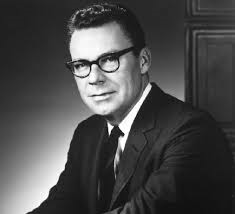 |
| Earl Nightingale |
Sunday, November 16, 2014
Playful Punctuation
"Once I rose above the noise and confusion, just to get a glimpse beyond this illusion"
-- Kansas, "Carry on my Wayward Son"
Because I strongly supported my argument for Friday's debate, I am going to discuss and elaborate more on the same topic.
 The differences of various writing styles portray that punctuation use cannot be totally defined because each writing technique has a specific way of effectively proving a claim. It was researched that Emily Dickinson, author of Source C, did not attend college for a vast amount of time and she dwelled in confinement the majority of her life. Because of this, she uses poetry, a writing style that allows manipulation of words and punctuation easily, and uses a lack of punctuation in order to feel free from her life of isolation.
If rules were set strictly in place, she would always be stuck in a place of seclusion. Punctuation in different contexts also has different effects on the writing piece, and therefore must be altered according to the writing style. With punctuation rules, this would be prohibited. Cosco of Source F uses two question marks in a sentence located in paragraph six. This is obviously a subjective choice, but it allows her to develop her unique style. Expressing one’s argument in a way that is sensible for the author is critical for the effectiveness of the work. The example tweet used in Source F lacks in punctuation, but focuses more on word content. In fact, the unusual lack of punctuation draws attention to her message in an otherwise monotone news feed. Similarly to the sources stated, punctuational rules serve as a restriction to authors. Without these limits, authors can develop a sturdy and compelling argument conveyed in a specific writing style.
-- Kansas, "Carry on my Wayward Son"
Because I strongly supported my argument for Friday's debate, I am going to discuss and elaborate more on the same topic.
The differences of various writing styles portray that punctuation use cannot be totally defined because each writing technique has a specific way of effectively proving a claim. It was researched that Emily Dickinson, author of Source C, did not attend college for a vast amount of time and she dwelled in confinement the majority of her life. Because of this, she uses poetry, a writing style that allows manipulation of words and punctuation easily, and uses a lack of punctuation in order to feel free from her life of isolation. If rules were set strictly in place, she would always be stuck in a place of seclusion. Punctuation in different contexts also has different effects on the writing piece, and therefore must be altered according to the writing style. With punctuation rules, this would be prohibited. Cosco of Source F uses two question marks in a sentence located in paragraph six. This is obviously a subjective choice, but it allows her to develop her unique style. Expressing one’s argument in a way that is sensible for the author is critical for the effectiveness of the work. The example tweet used in Source F lacks in punctuation, but focuses more on word content. In fact, the unusual lack of punctuation draws attention to her message in an otherwise monotone news feed. Similarly to the sources stated, punctuational rules serve as a restriction to authors. Without these limits, authors can develop a sturdy and compelling argument conveyed in a specific writing style.
Sunday, November 9, 2014
Longing for Love
"It's a backstabbing world honey, just lean your head back"
--Augustana, "Meet You There"
"It had occurred to Pecola some time ago that if her eyes, those eyes that held the pictures, and knew the sights-if those eyes of hers were different, that is to say, beautiful, she herself would be different. Her teeth were good, and at least her nose was not big and flat like some of those who were thought so cute. If she looked different, beautiful, maybe Cholly would be different, and Mrs. Breedlove too. Maybe they'd say, 'Why, look at pretty-eyed Pecola. We mustn't do bad things in front of those pretty eyes'" (Morrison page 46).
Pecola believes that if her eye color changed to blue, her entire life would change. Friends, acquaintances, and family would treat her differently. She wants her situation to change because she has dwelled in a life of destitution and hatred. Pecola feels as if something is missing. This something, is love. Morrison states the Breedlove's house is just a "store", implying that soothing warmth of family love is absent from their home. Ultimately, Pecola wants to feel loved, and believes that blue eyes would grant it. Her drive to be beautiful is connected to her wish to belong, in both black and white society. She is unwanted by students and family because she is "ugly", so she associates beauty with belonging. If people perceive her as beautiful, because of her eyes, then she will maintain an identity of elegance. Pecola's only way of finding universal love is to conform to white beauty ideals.
This passage of The Bluest Eye is filled with many strong emotions. The audience obtains a true understanding of the reasons behind Pecola's wish to have blue eyes. This makes the entire book worthwhile because Pecola cannot be misunderstood, and it is simpler to follow her path of destruction. Morrison repeats the words "beautiful" and "different" to emphasize that Pecola wants to be beautiful in order to have a different identity. Not only would redefined beauty change the actions of those around her, but it would increase the amount of passion she obtains from society. Her mindset revolves around the beauty she lacks, but Pecola's heart is the apex of beauty. She still learns to love when everything and everyone around her decides to hate.

--Augustana, "Meet You There"
"It had occurred to Pecola some time ago that if her eyes, those eyes that held the pictures, and knew the sights-if those eyes of hers were different, that is to say, beautiful, she herself would be different. Her teeth were good, and at least her nose was not big and flat like some of those who were thought so cute. If she looked different, beautiful, maybe Cholly would be different, and Mrs. Breedlove too. Maybe they'd say, 'Why, look at pretty-eyed Pecola. We mustn't do bad things in front of those pretty eyes'" (Morrison page 46).
Pecola believes that if her eye color changed to blue, her entire life would change. Friends, acquaintances, and family would treat her differently. She wants her situation to change because she has dwelled in a life of destitution and hatred. Pecola feels as if something is missing. This something, is love. Morrison states the Breedlove's house is just a "store", implying that soothing warmth of family love is absent from their home. Ultimately, Pecola wants to feel loved, and believes that blue eyes would grant it. Her drive to be beautiful is connected to her wish to belong, in both black and white society. She is unwanted by students and family because she is "ugly", so she associates beauty with belonging. If people perceive her as beautiful, because of her eyes, then she will maintain an identity of elegance. Pecola's only way of finding universal love is to conform to white beauty ideals.
This passage of The Bluest Eye is filled with many strong emotions. The audience obtains a true understanding of the reasons behind Pecola's wish to have blue eyes. This makes the entire book worthwhile because Pecola cannot be misunderstood, and it is simpler to follow her path of destruction. Morrison repeats the words "beautiful" and "different" to emphasize that Pecola wants to be beautiful in order to have a different identity. Not only would redefined beauty change the actions of those around her, but it would increase the amount of passion she obtains from society. Her mindset revolves around the beauty she lacks, but Pecola's heart is the apex of beauty. She still learns to love when everything and everyone around her decides to hate.
Sunday, November 2, 2014
Bluest Bruises
"But compared to your eyes, nothing shines quite as bright"
--Mayday Parade, "Miserable At Best"
The Bluest Eye. The title depicts hidden meanings within itself, as do many motifs in the novel.

The more obvious meaning of the title is Pecola's dream to have big, bright blue eyes, just like iconic white females. Pecola associates "beauty" with blue eyes, and believes she must possess this quality in order to be seen as beautiful. She believes that "if she looked different, beautiful, maybe Cholly would be different, and Mrs. Breedlove too"(Morrison 46). As if her appearance could change the behavior of her family, or the way she is cruelly treated at school.
As well as this, the word "blue" has a somber connotation. If someone "has the blues", they are sad and depressed internally. Because Pecola is frequently teased and lives in a distressed household, her eyes contain a melancholy and dismal attitude. "She was the only member of her class who sat alone at a double desk" (Morrison 45). Cruel treatment crushes and bruises a person's self-esteem. Pecola endures this for almost her entire life, which causes her to be depressed. Her mom even calls her "ugly" right after she is born (Morrison 126). In this context, she actually has blue eyes. Her dream has been fulfilled, but not in her intended way.
--Mayday Parade, "Miserable At Best"
The Bluest Eye. The title depicts hidden meanings within itself, as do many motifs in the novel.
The more obvious meaning of the title is Pecola's dream to have big, bright blue eyes, just like iconic white females. Pecola associates "beauty" with blue eyes, and believes she must possess this quality in order to be seen as beautiful. She believes that "if she looked different, beautiful, maybe Cholly would be different, and Mrs. Breedlove too"(Morrison 46). As if her appearance could change the behavior of her family, or the way she is cruelly treated at school.
As well as this, the word "blue" has a somber connotation. If someone "has the blues", they are sad and depressed internally. Because Pecola is frequently teased and lives in a distressed household, her eyes contain a melancholy and dismal attitude. "She was the only member of her class who sat alone at a double desk" (Morrison 45). Cruel treatment crushes and bruises a person's self-esteem. Pecola endures this for almost her entire life, which causes her to be depressed. Her mom even calls her "ugly" right after she is born (Morrison 126). In this context, she actually has blue eyes. Her dream has been fulfilled, but not in her intended way.
Saturday, October 25, 2014
Baleful Barbie
"She'll be in magazines, With all her fancy things"
-Mayday Parade, "You're Dead Wrong"
When I was younger, I absolutely loved Barbie dolls. Her dollhouse, the countless outfit combinations, her fancy limousine, and all her fancy things were so desirable. To little girls, Barbie's luxurious life was so idealistic and envied. But as life goes on and trends come and go, the trend of Barbie DOLLS has faded away, and the toy is not as popular. Rather, the trend is revealing its popularity in a different form.
 Many girls believe that they must resemble the ideal "Barbie" look (to some degree) in order to fit in. To achieve this look, one must have a perfect figure, which consists of a small waist, a big chest, and wide hips. Prager assures this statement in "Our Barbies, Ourselves" by stating, "There are millions of women who are subliminally sure that a thirty-nine-inch bust and a twenty-three-inch waist are the epitome of lovability" (para 3). How do women obtain this unrealistic perception of beauty?
From a very young age, Barbie was always there to play dress-up. To paint her nails with a felt-tip marker. To buy her more friends and a perfect boyfriend. According to www.hubpages.com, children's "early experiences have a significant, lasting impact on their cognitive and social development." Basically, a child's environment influences them significantly because their brains are rapidly maturing and they are induced with the aspects of their environment. This could be a reason explaining why people are immensely obsessed with beauty. If a child is given a Barbie doll to play with, and he or she covets her dream lifestyle, then they are more likely to desire this lifestyle at an older age because they have been influenced directly.
Although Barbie dolls brought me a lot of joy when I was younger, they are harmful if they create an unrealistic idea of beauty in someone's mind. Barbie dolls are meant to be played with. Hopefully young girls today can solely interpret this one aspect of the toy.
-Mayday Parade, "You're Dead Wrong"
When I was younger, I absolutely loved Barbie dolls. Her dollhouse, the countless outfit combinations, her fancy limousine, and all her fancy things were so desirable. To little girls, Barbie's luxurious life was so idealistic and envied. But as life goes on and trends come and go, the trend of Barbie DOLLS has faded away, and the toy is not as popular. Rather, the trend is revealing its popularity in a different form.
Many girls believe that they must resemble the ideal "Barbie" look (to some degree) in order to fit in. To achieve this look, one must have a perfect figure, which consists of a small waist, a big chest, and wide hips. Prager assures this statement in "Our Barbies, Ourselves" by stating, "There are millions of women who are subliminally sure that a thirty-nine-inch bust and a twenty-three-inch waist are the epitome of lovability" (para 3). How do women obtain this unrealistic perception of beauty? From a very young age, Barbie was always there to play dress-up. To paint her nails with a felt-tip marker. To buy her more friends and a perfect boyfriend. According to www.hubpages.com, children's "early experiences have a significant, lasting impact on their cognitive and social development." Basically, a child's environment influences them significantly because their brains are rapidly maturing and they are induced with the aspects of their environment. This could be a reason explaining why people are immensely obsessed with beauty. If a child is given a Barbie doll to play with, and he or she covets her dream lifestyle, then they are more likely to desire this lifestyle at an older age because they have been influenced directly.
Although Barbie dolls brought me a lot of joy when I was younger, they are harmful if they create an unrealistic idea of beauty in someone's mind. Barbie dolls are meant to be played with. Hopefully young girls today can solely interpret this one aspect of the toy.
Sunday, October 19, 2014
Feigned Festivities
"Wanted to believe in all the words that I was speaking" - Death Cab For Cutie, "Tiny Vessels"
As I finished reading "The Meaning of July Fourth for the Negro" by Fredrick Douglass, I understood that Douglass, as well as other negroes, view independence day in contrary ways. Although holiday festivities attempt to express a purpose for celebration, I ponder if they fully show this purpose to individuals.
Holidays can be interpreted in several different ways. If a holiday has a specific meaning to a person, then they are more likely to be affected by their own understanding of the ceremony. But other citizens celebrate solely with vague and restrictive emotions, never fully understanding. For Douglass, independence day "only reveals the immeasurable distance between us [African Americans and society]" (Para 4). He interprets the holiday as a brutal affirmation of African American's place in society and their unkind treatment. This concludes that Douglass's understanding of the holiday is different from many others.

 In today's society, many people forget the true significance of holidays. If you asked a fifth grader "What is the Fourth of July?", he or she would probably respond saying, "A day with fireworks, family and parades!" This, however, is not the case. America is focused more on the festivities rather than the reasons. And this poses my question- Are holiday festivities truly effective in portraying the purposes of celebrating? According to Laura Schlereth from www.atyourlibrary.org, you should "show your patriotism by celebrating and watching fireworks!" This is her way of interpreting the holiday. To me, patriotism is shown when fighting for your country, not from mediocre festivities. Schlereth does not fully understand, similarly to other Americans, and associates independence day with these festivities rather than its actual meaning. Since she does not have a direct relationship with Independence day, it's purpose is not shown through activities and she falls into a trap of hypocrisy.
Optimistically, America will soon escape from this trap and discover the real meaning of all celebrated holidays.
As I finished reading "The Meaning of July Fourth for the Negro" by Fredrick Douglass, I understood that Douglass, as well as other negroes, view independence day in contrary ways. Although holiday festivities attempt to express a purpose for celebration, I ponder if they fully show this purpose to individuals.
Holidays can be interpreted in several different ways. If a holiday has a specific meaning to a person, then they are more likely to be affected by their own understanding of the ceremony. But other citizens celebrate solely with vague and restrictive emotions, never fully understanding. For Douglass, independence day "only reveals the immeasurable distance between us [African Americans and society]" (Para 4). He interprets the holiday as a brutal affirmation of African American's place in society and their unkind treatment. This concludes that Douglass's understanding of the holiday is different from many others.
In today's society, many people forget the true significance of holidays. If you asked a fifth grader "What is the Fourth of July?", he or she would probably respond saying, "A day with fireworks, family and parades!" This, however, is not the case. America is focused more on the festivities rather than the reasons. And this poses my question- Are holiday festivities truly effective in portraying the purposes of celebrating? According to Laura Schlereth from www.atyourlibrary.org, you should "show your patriotism by celebrating and watching fireworks!" This is her way of interpreting the holiday. To me, patriotism is shown when fighting for your country, not from mediocre festivities. Schlereth does not fully understand, similarly to other Americans, and associates independence day with these festivities rather than its actual meaning. Since she does not have a direct relationship with Independence day, it's purpose is not shown through activities and she falls into a trap of hypocrisy.Optimistically, America will soon escape from this trap and discover the real meaning of all celebrated holidays.
Saturday, October 11, 2014
Sentimental Sympathy
"I sing myself a quiet lullaby, Let you go and let the lonely in, to take my heart again"
- Chrisina Perri, "The Lonely"
We all understand that Hester committed adultery, and is shamed by the Puritan society for doing so. Although her punishment is accurate during the time period in The Scarlet Letter, Hester deserves some sympathy regarding her ignominy.
 First of all, she is completely alienated and shunned by the community. This can be especially harsh in Puritan era; people were strict and rigid on their religious ideals and morals. According to Hawthorne, Hester grew "sensitive with daily torture" as she strolled through the town (83). People gave her the wrong kind of attention, which burdened her with a dreadful feeling of loneliness. Personally, I can't imagine living through daily life being incapable of interacting with others. This is one of the few ways humans can receive happiness and joy. Poor Hester was neglected of these feelings.
Hester is also separated from her true passion to Dimmesdale. Carelessly, she grew very fond of him, leading them to commit their sin. After her punishment, she ultimately cannot visit Dimmesdale because it would easily reveal him to be the second culprit. She cannot have any relations with him for seven years! If today's teenagers believe that a three-month relationship is significant, what does that prove of seven years? How would YOU feel if you were forbidden to be with the "love of your life"? Hester must have been drowning in sadness.
According to Harper Lee, author of To Kill A Mockingbird, “You never really understand a person until you consider things from his point of view… Until you climb inside of his skin and walk around in it.” In order to truly understand Hester's distant character, one must discover her heartache and feel it for themselves. Hester deserves pity for her anguish.
- Chrisina Perri, "The Lonely"
We all understand that Hester committed adultery, and is shamed by the Puritan society for doing so. Although her punishment is accurate during the time period in The Scarlet Letter, Hester deserves some sympathy regarding her ignominy.
First of all, she is completely alienated and shunned by the community. This can be especially harsh in Puritan era; people were strict and rigid on their religious ideals and morals. According to Hawthorne, Hester grew "sensitive with daily torture" as she strolled through the town (83). People gave her the wrong kind of attention, which burdened her with a dreadful feeling of loneliness. Personally, I can't imagine living through daily life being incapable of interacting with others. This is one of the few ways humans can receive happiness and joy. Poor Hester was neglected of these feelings. Hester is also separated from her true passion to Dimmesdale. Carelessly, she grew very fond of him, leading them to commit their sin. After her punishment, she ultimately cannot visit Dimmesdale because it would easily reveal him to be the second culprit. She cannot have any relations with him for seven years! If today's teenagers believe that a three-month relationship is significant, what does that prove of seven years? How would YOU feel if you were forbidden to be with the "love of your life"? Hester must have been drowning in sadness.
According to Harper Lee, author of To Kill A Mockingbird, “You never really understand a person until you consider things from his point of view… Until you climb inside of his skin and walk around in it.” In order to truly understand Hester's distant character, one must discover her heartache and feel it for themselves. Hester deserves pity for her anguish.
Subscribe to:
Posts (Atom)